
The Final Report of the Review of the Future Acts Regime was tabled in the Commonwealth Parliament on 24 June 2026.
Download the Final Report | Download the Summary Report
President’s Message
 The Australian Law Reform Commission’s Review of the Future Acts Regime represents the most significant review of the future acts regime since its inception almost 30 years ago. Throughout this Inquiry we’ve heard from many individuals and organisations around Australia, native title holders, governments and departments, miners, pastoralists and legal practitioners, and conducted detailed, rigorous research and analysis.
The outcome of this work is our Final Report, Fulfilling the Promise of Mabo: Reforming the Future Acts Regime in the Native Title Act 1993 (Cth), tabled in the Australian Parliament on 24 June 2026. This report contains 86 recommendations that aim to build a stronger native title system through a fairer and more efficient future acts regime. Through targeted and evidenced-based reforms, the future acts regime can equitably and effectively support genuine, constructive agreement making, support greater opportunities for economic development and benefit-sharing, streamline processes and reduce costs, and meet Australia’s international obligations.
At its heart, this report envisages a future acts regime that is fair, equal and non-discriminatory – a system that no longer positions native title and development as mutually exclusive, but rather as mutually reinforcing. I invite you to read our report and support our recommendations for reform.
– Justice Mordy Bromberg
President, Australian Law Reform Commission
Key findings
Listen to an overview of the Review of the Future Acts Regime and its Final Report, in a conversation between ALRC Commissioner Tony McAvoy SC and Principal Legal Officer Christopher Ash (approx 21 min).
The ALRC has found that reform of the future acts regime is needed to:
- uphold equality before the law, so that native title holders have access to fairer processes and outcomes when their native title rights and interests are infringed by future acts;
- provide a more efficient and streamlined future acts regime, which promotes economic development, including by delivering better socio-economic outcomes for First Nations peoples; and
- better comply with Australia’s international obligations.
The ALRC found that the future act regime operates unfairly and is discriminatory in key respects. Native title is a form of property. However, when native title holders’ rights and interests are infringed by future acts, the regime generally fails to provide the fundamental protections afforded to other property rights holders:
- procedural rights — reasonable opportunities to participate in and influence decisions about whether future acts should be allowed to proceed, and if so how they could be done in a manner which avoids or reduces their effects on native title rights and interests; and
- substantive rights — an entitlement to effective, timely, fair, and just redress or compensation for any harm or injury caused by future acts.
Recommendations
If implemented, the ALRC’s reforms would deliver a regime that fulfils the promise of the High Court’s Mabo decisions by: ensuring equality before the law and compliance with Australia’s international obligations; supporting fair processes and outcomes for native title parties; and providing greater certainty, efficiency, and streamlined decision-making for governments and industry.
Key reforms recommended in the Final Report include:
- Improving the framework for agreement-making, including the right to negotiate, through enhancing equality of bargaining power between parties and expanding the National Native Title Tribunal’s ability to assist parties in negotiating agreements.
- Replacing inefficient and inflexible processes with an impact-based process that rationally determines the level of procedural protection afforded to native title holders based on the nature and impact of the proposed future act — rather than irrational and outdated categories based largely on industry or land tenure.
- Providing for fair and equitable arbitral determinations where parties are unable to reach agreement by improving the National Native Title Tribunal’s ability to resolve disputes fairly and in accordance with Australia’s international obligations.
- Providing native title holders access to fair, just, and timely redress, including compensation.
- Providing clearer and more accessible pathways for compliance, enforcement, and legal remedies.
- Improving resourcing and costs support to enable native title holders to participate effectively in the future acts regime, as well as to reduce delay and other inefficiencies experienced by all parties as a result of under-resourcing.
- Introducing Native Title Plans to enable native title holders to proactively contribute to future acts processes and set out their aspirations for development on Country.
The anticipated benefits of the recommended reforms include:
- increased opportunities for economic development and benefit-sharing;
- a more efficient and streamlined future acts regime with lower transactional costs;
- a future acts regime that supports fair negotiations, promotes relationship-building, and facilitates equitable outcomes; and
- a future acts regime that reflects Australia’s international law obligations.
See the full recommendations below.
Chapter 3 | Future Act Agreement-Making (Recommendations 1-10)
Recommendation 1
The Native Title Act 1993 (Cth) be amended to require that all parties negotiating any future act agreement must negotiate in good faith, with good faith to be informed by conduct standards set out in the Act.
Recommendation 2
The Native Title Act 1993 (Cth) be amended to identify standards of conduct to be followed in order to meet the obligation to negotiate in good faith referred to in Recommendation 1. These standards should promote the obtaining of free, prior, and informed consent of the native title parties to a future act agreement and should
address the following matters:
- to enable informed consent and the informed agreement of each party, including within a reasonable time of any request, each negotiation party provide to each other party access to relevant and sufficient information, other than confidential information including the native title party’s culturally sensitive information, relating to the future act and the activities likely to be undertaken pursuant to it;
- a negotiation party in a position to, or under an obligation to, facilitate the effective participation of another party, take such action (including by providing
resources) as is reasonable to do in the circumstances; - no negotiation party engage in dishonesty, coercion, duress, or fraud, exert undue influence over another party or disrespect the internal protocols of
another party, including as to the person or persons through which negotiations for that party are to be conducted; - each negotiation party communicate with, and respond to, each other negotiation party within a reasonable time;
- each negotiation party be open-minded to proposals made by another party, genuinely consider any such proposals, and be willing to make compromises where compromise is appropriate;
- each negotiation party should ensure that substantive matters for negotiation are able to be addressed and endeavour to avoid the deadlocking or preventing of negotiations about those matters by procedural disagreements; and
- negotiation parties should do what a reasonable person would do in the circumstances and act in accordance with the Native Title Act 1993 (Cth).
Recommendation 3
The Australian Government develop guidelines, in consultation with the National Native Title Tribunal, in relation to the good faith standards outlined in Recommendation 2 to assist negotiation parties in operationalising the standards in the Native Title Act 1993 (Cth) by providing examples of behaviour or indicia that may or may not amount to negotiating in good faith. These guidelines should be publicly available.
Recommendation 4
The Native Title Act 1993 (Cth) be amended to consolidate, clarify, and expand the functions available to the National Native Title Tribunal to assist parties in negotiating future act agreements, implementing agreements, and resolving disputes under agreements. The Tribunal’s functions should extend to conducting, as appropriate in each case:
- conferences;
- mediation;
- conciliation; and
- consent arbitration of disputes under a future act agreement, including pursuant to a dispute resolution clause of the kind contemplated by Recommendation 14.
Recommendation 5
- The Native Title (Prescribed Bodies Corporate) Regulations 1999 (Cth) be amended to allow Prescribed Bodies Corporate to use standing instructions to enter into future act agreements (subject to compliance with any conditions imposed by the common law holders), provided that the future act agreed to under such agreements is not an act that extinguishes native title.
- These amendments be accompanied by further amendments to either or both of the Native Title (Prescribed Bodies Corporate) Regulations 1999 (Cth) and the Corporations (Aboriginal and Torres Strait Islander) Act 2006 (Cth) which the Australian Government, in consultation with relevant stakeholders, determines for the purpose of identifying appropriate mechanisms for providing common law holders with oversight over the exercise of standing instructions by the Prescribed Body Corporate.
Recommendation 6
The Native Title Act 1993 (Cth) be amended to provide that, for a future act where the Prescribed Body Corporate for the land and waters of the future act is the proponent,
and where the future act does not require as a procedural right either negotiation or agreement by the Prescribed Body Corporate, the future act is valid (with the Prescribed Body Corporate remaining subject to the obligations to native title holders under the Native Title (Prescribed Bodies Corporate) Regulations 1999 (Cth)).
Recommendation 7
The Native Title Act 1993 (Cth) be amended to provide that, for a future act where the Prescribed Body Corporate for the land and waters of the future act is the proponent, where the future act requires as a procedural right either negotiation or agreement by the Prescribed Body Corporate, including an indigenous land use agreement, then consistently with the approach taken by the Native Title (Prescribed Bodies Corporate) Regulations 1999 (Cth), the Prescribed Body Corporate be required to:
- where the common law holders have provided standing instructions as currently permitted under the Native Title (Prescribed Bodies Corporate) Regulations 1999 (Cth), comply with those standing instructions;
- where there are no standing instructions in place, consult with and obtain the consent of the common law holders; and
- provide a certificate to the Native Title Registrar certifying that it has complied with the applicable process in either (a) or (b) of this Recommendation, and such certificate is recorded in accordance with Recommendation 8.
Recommendation 8
Where a Prescribed Body Corporate lodges a certificate with the Native Title Registrar in line with Recommendation 7, the Registrar must place details about the certificate on a publicly available record. The record should confirm the Prescribed Body Corporate details, a description of the area covered by the certificate, and the future act or class of acts covered by the certificate.
Recommendation 9
Regulation 9 of the Native Title (Prescribed Bodies Corporate) Regulations 1999 (Cth) be amended to require that when:
- a Prescribed Body Corporate prepares a Regulation 9 Certificate under the Native Title (Prescribed Bodies Corporate) Regulations 1999 (Cth) certifying that it has consulted and obtained consent in relation to a native title decision;
- the native title decision subject to consultation and consent is the decision to enter an indigenous land use agreement or agreement under section 31 of the Native Title Act 1993 (Cth); and
- an ancillary agreement has been negotiated,
the Regulation 9 certificate must specify that the Prescribed Body Corporate has also discharged its consultation and consent obligations in relation to that ancillary agreement.
Recommendation 10
Part 2 Division 3 Subdivision C of the Native Title Act 1993 (Cth) be amended to require that where the native title party to an area agreement indigenous land use agreement is a registered native title claimant or a group as defined by s 24CD, the native title group must consider the terms of any ancillary agreement to that area agreement indigenous land use agreement when authorising it.
Chapter 4 | Future Act Agreement Content (Recommendations 11-16)
Recommendation 11
The Native Title Act 1993 (Cth) be amended to provide that:
- Subject to the exemptions in (2)–(5) below, any term or clause in a future act agreement which has the effect of limiting or restricting a native title party from:
- raising a grievance relating to the making or operation of the agreement, or the conduct of any party to it;
- exercising rights and accessing remedies under the law, including under cultural heritage legislation; or
- disclosing information about or in relation to the agreement to a governmental authority, any court, or tribunal;
- is prohibited from inclusion in an agreement and is void and unenforceable to the extent it has that effect.
- The prohibition not apply to the raising of a grievance where a grievance is not raised to protect a legitimate interest or is raised vexatiously.
- The prohibition not apply to a term in so far as that term would limit or restrict the disclosure of commercially sensitive and confidential information which is recognised as such by the agreement and where the public interest in the non-disclosure of the information is not outweighed by the public interest in the information being disclosed in furtherance of a purpose identified in (1).
- The prohibition not apply in relation to a dispute resolution process under the agreement.
- The prohibition not apply to existing agreements but offending clauses in existing agreements should be rendered void and unenforceable.
Recommendation 12
- The Native Title Act 1993 (Cth) be amended to provide that any term of a future act agreement which has the effect of limiting or restricting how native title parties administer or manage payments under agreements is prohibited, and void and unenforceable to the extent it has that effect.
- This recommendation is not intended to apply to existing agreements.
Recommendation 13
A model periodic review clause be developed for inclusion in future act agreements. The model periodic review clause should be developed through a consultative process and the Native Title Act 1993 (Cth) amended to provide that the model clause will be deemed to apply in any future act agreement with an unspecified duration, or a duration of longer than five years, unless the parties agree an alternative form of review clause. This recommendation is not intended to apply to existing agreements.
Recommendation 14
- The Native Title Act 1993 (Cth):
- require that any future act agreement contain a dispute resolution clause for dealing with disputes under the agreement. The dispute resolution clause should include a process for consultation, mediation, or conciliation (which may incorporate traditional processes of the native title parties as well as access to mediation or conciliation before the National Native Title Tribunal) and, should those processes fail to resolve a dispute, provide for resolution by arbitration conducted by the National Native Title Tribunal or an agreed arbitrator;
- prohibit any provision in a dispute resolution clause which limits access to the courts in relation to any issue which may be the subject of arbitration under the clause but provide that, other than for an application for urgent interlocutory or injunctive relief, courts may, on the application of a party to the agreement, stay a proceeding where it is in the interests of justice to do so; and
- provide for an appeal on a question of law to the Federal Court of Australia.
- Should the parties to the agreement not include in their agreement a dispute resolution clause of the kind required by the Native Title Act 1993 (Cth), a model dispute resolution clause (drafted by the Australian Government in consultation with the National Native Title Tribunal and embodied in a regulation) containing the features identified above, be deemed by the Act to be included in the agreement.
- This recommendation is not intended to apply to existing agreements.
Recommendation 15
Sections 24EB(4), (5), and (6) and s 24EBA(5) of the Native Title Act 1993 (Cth) be amended to provide that statutory compensation payable under an indigenous land use agreement is full and final for any future act the subject of an indigenous land use agreement only where the agreement expressly provides as such.
Recommendation 16
The Native Title Act 1993 (Cth) be amended to provide that:
- for any future act for which statutory compensation is payable by a state, territory, or the Commonwealth (to whom the act is attributable), the laws of a state, territory, or the Commonwealth may provide that a person other than the state, territory, or Commonwealth is liable to pay the statutory compensation; and
- if, when the statutory compensation for a future act is required to be paid it is not reasonably practicable for the native title holders to recover compensation from that other person, the relevant state, territory, or Commonwealth (to whom the act is attributable) remains liable to pay the statutory compensation.
Chapter 5 | Future Act Agreements: Post-Agreement (Recommendations 17-23)
Recommendation 17
The Native Title Act 1993 (Cth) be amended to require that there be published:
- on the Register of Indigenous Land Use Agreements, information as to whether or not the indigenous land use agreement recorded on the Register has an associated ancillary agreement; and
- on the record of agreements made under section 31 of the Act, a statement to the effect that the parties consent to the doing of the future act or class of act in which the act is included, and if this consent is subject to conditions.
This Recommendation operates prospectively.
Recommendation 18
The Native Title Act 1993 (Cth) be amended to provide that:
- under s 199A, the Native Title Registrar’s functions include an own motion power to maintain the Register of Indigenous Land Use Agreements, including by requesting information from the agreement parties in relation to an indigenous land use agreement; and
- in addition to the matters already set out in s 199C(1), include an additional ground for the removal from the Register of Indigenous Land Use Agreements of the details of an agreement that, having provided all the parties to the agreement with a reasonable opportunity to comment, the Registrar believes, on reasonable grounds, that the agreement has expired or been terminated, or has otherwise come to an end.
Recommendation 19
The Native Title Act 1993 (Cth) be amended to:
- require the creation of a record of expired indigenous land use agreements that expire on or after the implementation of this Recommendation, to be established and kept by the Native Title Registrar; and
- provide that when an indigenous land use agreement is removed from the Register of Indigenous Land Use Agreements for any reason, it is to be placed on the record of expired indigenous land use agreements.
Recommendation 20
The Native Title Act 1993 (Cth) be amended to provide that:
- a. the Prescribed Body Corporate for a determined area has a prima facie right to access all registered indigenous land use agreements, agreements under section 31 of the Act, and any ancillary agreement (to an indigenous land use agreement or agreement under section 31 of the Act) in so far as such an agreement deals with the determination area of the Prescribed Body Corporate;
- the right to access is exercisable against any person who has access to such an agreement on the making of a written request by the Prescribed Body Corporate (including the Native Title Registrar) and on the giving of notice to every party to the agreement (in so far as they are known or reasonably discoverable to the Prescribed Body Corporate);
- where, following a reasonable time after the giving of notice, no dispute about access has arisen, the Native Title Registrar be empowered to provide the Prescribed Body Corporate with a copy of the relevant registered indigenous land use agreements or agreements under section 31 of the Act; and
- where there is any dispute about access, the parties may seek resolution by the Federal Court of Australia (preferably by a Registrar of that court at first instance) and specify that, in resolving any dispute about access to information which is confidential, the Court have regard to whether the public interest in refusing access is outweighed by the public interest in the Prescribed Body Corporate obtaining access for the purposes for which access has been sought.
Recommendation 21
The Native Title Act 1993 (Cth) provide that where any difficulty or substantial unfairness arises for a Prescribed Body Corporate or the native title holders for a determined area, and the difficulty or unfairness arises in part or in whole because the determined area, or part of it, is subject to a pre-determination future act agreement which was not made or authorised by the same persons as those who are the native title holders:
- the Federal Court of Australia be empowered to make such orders as the Court considers appropriate to resolve the difficulty or substantial unfairness;
- specify that in doing so, the Federal Court of Australia have regard to any difficulty or substantial unfairness that may be occasioned on a party or a beneficiary to the pre-determination agreement by the making of an order or orders; and
- provide that an order made in accordance with this Recommendation has effect despite anything contained in the pre-determination agreement, the Act, or any other Commonwealth law or any State or Territory law.
In this Recommendation ‘pre-determination future act agreement’ means either a registered indigenous land use agreement or an agreement under section 31 of the Native Title Act 1993 (Cth), or any ancillary agreement to that indigenous land use agreement or agreement under section 31 of the Act, made before a native title determination was made for the relevant area.
Recommendation 22
The Native Title Act 1993 (Cth) be amended to empower the Federal Court of Australia to construe and make a declaration as to the meaning of a future act agreement. The declaration would be binding on all parties to the agreement.
Recommendation 23
Either or both of the Native Title (Prescribed Bodies Corporate) Regulations 1999 (Cth) and the Corporations (Aboriginal and Torres Strait Islander) Act 2006 (Cth) be amended to require that Prescribed Bodies Corporate:
- keep a copy of all future act agreements, made on or after the implementation of this Recommendation, at their registered office. This includes agreements that have been amended without a reauthorisation process, and agreements entered into using standing instructions;
- make copies of those future act agreements, and an accessible high-level summary of the agreement, available to common law holders who request it; and
- include an accessible high-level summary of each future act agreement negotiated during the financial year in the Prescribed Body Corporate’s annual report.
Chapter 6 | Reshaping the Statutory Procedures: Impact-based Scheme (Recommendations 24-39)
Recommendation 24
Part 2 Division 3 Subdivisions G–N of the Native Title Act 1993 (Cth) be repealed and replaced with a scheme for validating any infringement made by a future act to native title rights and interests which better aligns the nature and extent of the procedural rights to native title rights and interests, with the nature and extent of the infringement upon those rights and interests and the capacity of native title parties to enjoy and exercise them. The impact-based scheme should be based on the reforms outlined in Recommendations 25 to 38.
Recommendation 25
The impact-based scheme provide for five groups of future act categories with the following applicable procedural rights for each respective group:
- Group A ‘assessed limited impact acts’, which require that affected native title parties be notified of the future act and provided an opportunity to comment (see Recommendation 30);
- Group B ‘assessed lower impact acts’, which require that affected native title parties be afforded an opportunity to engage in consultation with the relevant government party and/or future act proponent (see Recommendation 31);
- Group C ‘negotiated lower impact acts’, which require that affected native title holders be afforded the procedural rights and other conditions as agreed by the relevant Prescribed Body Corporate and the relevant government party and/or future act proponent (see Recommendation 33);
- Group D ‘right to negotiate higher impact acts’, which require that affected native title parties be afforded the right to negotiate in accordance with the right to negotiate provisions (see Recommendation 34); and
- Group E ‘equivalency future acts’, which require that affected native title parties be afforded the same procedural rights, including the capacity to avoid an infringement upon their native title rights and interests, as would be afforded to a holder of freehold title in the same circumstances (see Recommendation 35).
Recommendation 26
The Native Title Act 1993 (Cth) provide that:
- regulations may prescribe the categories of future acts that are included in each of Group A and Group B;
- the regulations may not prescribe for inclusion in Groups A or B any category of future act or any future act which is included in Group E or future acts involving compulsory acquisition for a non-governmental purpose;
- the regulations are to be made upon, and be consistent with, a recommendation of the National Native Title Tribunal (‘NNTT Recommendation’) made in accordance with the impact-based assessment process outlined in Recommendation 27; and
- the regulations be legislative instruments subject to the requirements of the Legislation Act 2003 (Cth), including Parliamentary disallowance, but excluding the sunsetting regime in Part 4 of that Act.
Recommendation 27
The Native Title Act 1993 (Cth) provide that:
- the National Native Title Tribunal be empowered to make NNTT Recommendations which identify and define the nature and scope of a category, or categories, of future acts to be included by regulation in either Group A or Group B; and
- the President of the Tribunal or, at his or her election, another Presidential member of the Tribunal or a panel of members of the Tribunal presided over by a Presidential member, carry out the functions of assessing and making a NNTT Recommendation.
The Native Title Act 1993 (Cth) and/or delegated legislation (akin to rules) made by the Tribunal provide for a process for a category, or categories, of future acts to be assessed by the Tribunal as appropriate for inclusion in either Group A or Group B:
- the process shall include the following features:
- initiation by the President, or on the application of an interested person (interested persons to include government, future act proponents or their representative bodies, and native title parties or their representative bodies);
- the capacity for the President to call for applications to be made in relation to future act categories relevant to a particular industry or industry sector;
- the capacity for the Tribunal to, at the discretion of the President, deal with multiple applications in a single process;
- the capacity for the Tribunal to amend, adjust, or reformulate the nature and scope of a future act category the subject of any application;
- the capacity for the Tribunal to notify interested persons of the initiation of a process and for interested persons to apply to be included as ‘participating parties’;
- the capacity of the Tribunal to determine the ‘participating parties’ for each process; and
- subject to any requirements made by the Act, the provision to the Tribunal of a broad discretionary power to fairly determine its procedures and the manner by which it will carry out its assessment function, including a capacity to conduct the process, or part of it, in an inquisitorial manner by making its own investigations and utilising its own experts or referees.
The Native Title Act 1993 (Cth) require that:
- participating parties be given the opportunity to be consulted by the Tribunal and for their views to be fairly considered, including, at the discretion of the Tribunal, by providing evidence and/or submissions; and
- in making its assessment, the Tribunal be satisfied that the category of future acts meets the ‘lower-impact criteria’ (see Recommendation 28) for inclusion in Group B and that criteria as well as the ‘limited-impact criteria’ (see Recommendation 29) for inclusion in Group A.
The Native Title Act 1993 (Cth) provide that:
- in order for a category of future acts to satisfy the ‘limited-impact criteria’ or ‘lower-impact criteria’, the Tribunal be empowered to determine and specify conditions applicable to a future act falling within the scope of the category;
- the Tribunal be empowered to determine and specify the conditions necessary to provide the native title parties affected by the future act, fair and just redress within a reasonable time; and
- the Tribunal may designate a condition to be a ‘validating condition’, noncompliance with which would result in the future act being invalid from the time the future act is done, unless the invalidity is rectified by a court (see Recommendation 75).
The Native Title Act 1993 (Cth) provide that a NNTT Recommendation be a decision amenable to review under the Administrative Decisions (Judicial Review) Act 1977 (Cth).
Recommendation 28
The Native Title Act 1993 (Cth) provide that:
- a category of future acts may be recommended by the National Native Title Tribunal for inclusion in Group A or B where the future acts within that category do not consist of, authorise, or otherwise involve:
- ‘major disturbance’ to any land or waters the subject of the native title rights and interests concerned;
- material impact on the cultural rights and interests of the native title parties, including on their capacity to enjoy or exercise those rights and interests, in relation to their freedom to carry out rights, ceremonies, or other activities of cultural significance on the land or waters in accordance with their traditions or by interfering with areas or sites recognised by their traditional laws and customs as culturally significant;
- substantial interference with the carrying on, or the enjoyment of, the community or social activities or facilities of the native title parties; and
- economic loss or detriment to the native title parties other than where the loss or detriment likely to be caused is negated by a contemporaneous payment or the provision of a benefit.
For the purposes of (i), ‘major disturbance’ does not include a significant change or alteration to the land or waters which is transitory and where, within a reasonable time of completion of the activity undertaken pursuant to the future act which has caused the change or alteration, the land or waters will be substantially restored to their condition prior to the activity being done. It does not include the taking and use of water in an amount which regulations require that the right to negotiate be afforded to native title parties.
- impact shall be assessed having regard to the impact of the future act within the category on the native title rights and interests including the impact of the activities likely to occur in pursuance of the future act; and
- impact will be assessed contextually, taking into account the surrounding circumstances in which the activities, likely to be undertaken under a future act within the category, are likely to occur.
Recommendation 29
The Native Title Act 1993 (Cth) provide that a future acts category may be recommended by the National Native Title Tribunal for inclusion in Group A where the Tribunal is satisfied that it meets the ‘lower-impact criteria’ (see Recommendation 28) and is also satisfied that, by reason of the limited impact on native title rights and interests and the capacity of the native title parties to enjoy and exercise those rights and interests, of the future acts falling within the category, consultation of the kind provided for in Recommendation 31 with affected native title parties for the purpose of mitigating any such impact is unnecessary.
Recommendation 30
The Native Title Act 1993 (Cth) provide that when a future act falls within Group A, before the future act is done, the government party must:
- notify, in the way determined by legislative instrument, any representative Aboriginal or Torres Strait Islander bodies, and native title parties in relation to the land or waters that will be affected by the future act, that the future act is proposed to be done; and
- provide an opportunity to comment, within a reasonable time, as follows:
- to any registered Prescribed Body Corporate in relation to the land or waters that will be affected by the future act;
- if there is no Prescribed Body Corporate, to any registered native title claimants in relation to the land or waters that will be affected by the future act; or
- if there is no registered Prescribed Body Corporate or registered native title claimant in relation to the land or waters that will be affected by the future act, to any representative Aboriginal or Torres Strait Islander bodies; and
- consider any comments made by those parties and provide any comments made to the proponent for its consideration.
Recommendation 31
The Native Title Act 1993 (Cth) provide that when a future act falls within Group B, before the future act is done and before a final decision is made about whether (or
how) activities likely to be undertaken in the pursuance of the future act are to be done, the government party must:
- notify, in the way determined by legislative instrument, any representative Aboriginal or Torres Strait Islander bodies, and native title parties in relation to the land or waters that will be affected by the future act, that the future act is proposed to be done; and
- provide an opportunity to be consulted in relation to the future act as follows:
- to any registered Prescribed Bodies Corporate in relation to the land or waters that will be affected by the future act;
- if there is no Prescribed Body Corporate, to any registered native title claimants in relation to the land or waters that will be affected by the future act; or
- if there is no registered Prescribed Body Corporate or registered native title claimant in relation to the land or waters that will be affected by the future act, to any representative Aboriginal or Torres Strait Islander bodies.
The Native Title Act 1993 (Cth) provide that the notification must identify:
- a reasonable timeframe within which the native title party or any representative Aboriginal or Torres Strait Islander bodies may request consultation;
- how that party may request consultation; and
- that the party may request consultation with either or both of the government party proposing to do the future act and any proponent.
The Native Title Act 1993 (Cth) provide that if consultation is not requested by the native title party or any representative Aboriginal or Torres Strait Islander bodies, then the future act may be done after the expiry of the reasonable timeframe notified for requesting consultation.
The Native Title Act 1993 (Cth) provide that if consultation is requested, then:
- sufficient information about the future act is to be provided to the native title party or any representative Aboriginal or Torres Strait Islander bodies to ensure that consultation is properly informed;
- the parties must consult with a view to ascertaining any reasonably practicable measures to avoid or mitigate any adverse impact of the future act on native title rights and interests; and
- the government party and/or future act proponent must give genuine consideration to adopting any measures requested by the native title party or any representative Aboriginal or Torres Strait Islander bodies.
The Native Title Act 1993 (Cth) provide that after consultation occurs, the person doing the future act is, on request of the native title party or any representative Aboriginal or Torres Strait Islander bodies, to prepare and provide to that native title party a consultation report which includes:
- details of the consultation undertaken;
- details of any measures to avoid or mitigate the adverse impact of the future act agreed to be done by the future act proponent; and
- where avoidance or mitigatory measures requested by the native title parties or any representative Aboriginal or Torres Strait Islander bodies have not been adopted, an explanation as to why they have not adopted.
The Native Title Act 1993 (Cth) provide that any measures raised in consultation which a future act proponent has agreed to do, shall constitute conditions for the doing of the future act.
Recommendation 32
The Native Title Act 1993 (Cth) provide that when the procedural right associated with a future act is notification and opportunity to comment or opportunity to be consulted, utilising those opportunities does not amount to a ‘native title decision’ for the purposes of the Native Title (Prescribed Bodies Corporate) Regulations 1999 (Cth).
Recommendation 33
The Native Title Act 1993 (Cth) provide that in order for a future act to be validated in accordance with the provisions applicable to Group C:
- the proposed future act must relate to land or waters where native title has been determined to exist;
- the person proposing to do the future act must:
- notify the relevant Prescribed Body Corporate that it wishes for the future act to be validated in accordance with Group C; and
- ii. enter into a ‘low impact agreement’ with the relevant Prescribed Body Corporate which may include the conditions upon which the future act is to be done and conditions providing for the redress to be provided to the affected native title holders;
- before making a ‘low impact agreement’ the relevant Prescribed Body Corporate must:
- be satisfied that the future act is one that meets the ‘lower-impact criteria’ (see Recommendation 28). In reaching its satisfaction, the Prescribed Body Corporate may have regard to any conditions to be agreed to with the future act proponent which specify measures that a future act proponent must take to avoid or to mitigate the physical, economic, cultural, and community or social impacts on native title rights and the capacity for native title parties to enjoy those rights; and
- ii. have, and comply with, standing instructions from the common law holders to enter such an agreement.
The Native Title Act 1993 (Cth) provide that:
- the ‘low impact agreement’ is enforceable in the same manner as other future act agreements;
- where a ‘low impact agreement’ specifies a condition to be a ‘validating condition’, non-compliance with that condition would result in the future act being invalid from the time the future act is done, unless the invalidity is rectified by a court (see Recommendation 75); and
- a future act that falls within a category in Group A or Group B may nevertheless be the subject of validation in accordance with the provisions for Group C.
Recommendation 34
The Native Title Act 1993 (Cth) provide that the following future acts fall within Group D:
- the creation or variation of a right to mine (unless allocated to Groups A or B);
- compulsory acquisition (whether by legislative act or otherwise) for a non-governmental purpose; and
- future acts that are not Group A, B, C, or E future acts.
The Native Title Act 1993 (Cth) provide that in relation to a future act that falls within Group D:
- the government party must give notice of the proposed future act to the native title parties and any representative Aboriginal or Torres Strait Islander bodies pursuant to s 29 of the Act; and
- the affected native title parties be afforded the right to negotiate in accordance with the right to negotiate provisions of the Act.
The Native Title Act 1993 (Cth) provide that in relation to a future act that falls within Group D in an area that is unclaimed and undetermined, the future act may be validly done (without further compliance with the applicable procedural rights) provided that a native title determination application is not:
- made before the end of three months after the notification day; and
- placed on the Register of Native Title Claims before the end of four months after the notification day.
Recommendation 35
The Native Title Act 1993 (Cth) provide that the following future acts fall within Group E:
- a. legislative acts (other than the creation or variation of a right to mine, or compulsory acquisition for non-governmental purpose);
- compulsory acquisition for a governmental purpose;
- emergency acts; and
- acts that would require the agreement of the freehold title holder, except future acts falling within s 24JAA made prior to 1 January 2030.
The Native Title Act 1993 (Cth) provide that in relation to a future act that falls within Group E:
- the government party must give notice of the proposed future act to the native title parties and any representative Aboriginal or Torres Strait Islander bodies; and
- the affected native title parties be afforded the same procedural rights, including the capacity to avoid an infringement upon their native title rights and interests, as would be afforded to a holder of freehold title in the same circumstances.
The Native Title Act 1993 (Cth) provide that in relation to a future act that falls within Group E in an area that is unclaimed and undetermined, the future act may be validly done (without further compliance with the applicable procedural rights) provided that a native title determination application is not:
- made before the end of three months after the notification day; and
- placed on the Register of Native Title Claims before the end of four months after the notification day.
Recommendation 36
The Native Title Act 1993 (Cth) provide that the non-extinguishment principle applies to all categories of future acts within Groups A, B, C, D, and E except compulsory acquisition.
Recommendation 37
The Native Title Act 1993 (Cth) provide that:
- in relation to all categories of future acts within Groups A, B, C, D, and E, the native title holders are entitled to statutory compensation for the future act in accordance with Part 2 Division 5 of the Act;
- the statutory compensation pass-through contemplated in Recommendation 16 applies to the entitlement to statutory compensation mentioned in (a); and
- when determining statutory compensation under Part 2 Division 5, the court, person, or body determining statutory compensation may take into consideration any redress provided by any conditions imposed through Groups A, B, or C processes.
Recommendation 38
Having regard to the time likely to be required for the National Native Title Tribunal to undertake its assessment process and make the NNTT Recommendations for Groups A and B (see Recommendation 27) and, having in mind that the time required is currently uncertain and dependent upon the resourcing which the Tribunal may be provided with, transitional provisions be enacted in conjunction with the enactment of the reforms recommended to the Native Title Act 1993 (Cth), which:
- preserve the capacity of a future act, which currently requires affected native title parties to be afforded either notice of a future act, an opportunity to comment or consultation, to be dealt with in accordance with the statutory procedures currently in force; and
- provide that the preservation:
- not apply to a future act that falls within Group E;
- in relation to a future act which falls into a category of future acts included in Group A or Group B, lapse on the day such a category is included in those Groups; and
- end on a date to be determined (by reference to the time likely to be required by the Tribunal), which date shall not exceed 24 months from the date of enactment of the proposed reforms.
Recommendation 39
Sections 32 and 237 of the Native Title Act 1993 (Cth) be repealed and related provisions amended to repeal the expedited procedure.
Chapter 7 | Statutory Procedures: Alternative Reforms (Recommendations 40-53)
Recommendation 40
Part 2 Division 3 Subdivision G of the Native Title Act 1993 (Cth), which provides for future acts concerning primary production, be repealed in its entirety.
Recommendation 41
Section 24HA of the Native Title Act 1993 (Cth), which provides for the management or regulation of water, aquatic resources, and airspace, be amended to:
- amend ss 24HA(1) and 24HA(2) to clarify that ‘water’ and ‘management or regulation of water’ does not include ‘the bed or subsoil under, or airspace over, any sea, river, lake, tidal inlet, bay, estuary, harbour, subterranean waters or other watercourse or water body, or the shore, or subsoil under or airspace over the shore, between high water and low water’;
- provide in s 24HA(7) that the procedural rights for future acts covered by s 24HA that confer a right for the taking or use of water or aquatic resources at deemed significant impact quantities (see paragraph (d) of this recommendation) are subject to the right to negotiate in Part 2 Division 3 Subdivision P, and all other future acts concerning water and aquatic resources are subject to the procedural right to provide the native title parties the opportunity to be consulted;
- provide that the procedural rights for future acts concerning airspace is to provide notice and an opportunity to comment (see Recommendation 30 relating to the new notice and comment procedure); and
- enable the Minister to make delegated legislation to prescribe the amounts of water and aquatic resources that will constitute a deemed significant impact quantity, such regulations to be a legislative instrument and subject to the requirements of the Legislation Act 2003 (Cth), including Parliamentary disallowance, but excluding the sunsetting regime in Part 4 of that Act.
Recommendation 42
Part 2 Division 3 Subdivision I of the Native Title Act 1993 (Cth), which provides for pre-existing right-based acts, renewals, and extensions, be amended to provide that all renewals, re-grants, and extensions of non-native title rights and interests be subject to the equivalency principle, so that the procedural rights afforded to native title parties are no less favourable than the rights afforded to ordinary title holders for such acts.
Recommendation 43
Section 24JA(1)(e)(ii) of the Native Title Act 1993 (Cth), which enables a future act in the area of a reservation granted prior to 23 December 1996 to be done where the act’s impact on native title is no greater than the impact that any act that could have been done under or in accordance with the reservation would have had, be repealed.
Recommendation 44
Section 24JA(2) of the Native Title Act 1993 (Cth), which provides that a future act that consists of the use by a statutory authority or any person in good faith of an area subject to a lease that was granted to the statutory authority for a particular purpose, be repealed.
Recommendation 45
Section 24JB of the Native Title Act 1993 (Cth) be amended to:
- repeal s 24JB(2), which provides that if a future act is the construction or establishment of public works, native title is extinguished; and
- provide that the non-extinguishment principle applies to all future acts that are covered by Part 2 Division 3 Subdivision J.
Recommendation 46
Part 2 Division 3 Subdivision J of the Native Title Act 1993 (Cth), which provides for future acts done in the area of a reservation that was granted prior to 23 December 1996, be amended to provide that the procedural right to be followed before the act can be done is to provide an opportunity to be consulted to the native title parties.
Recommendation 47
Part 2 Division 3 Subdivision K of the Native Title Act 1993 (Cth), which provides for the construction of facilities that provide services to the general public, be amended to:
- provide in ss 24KA(1)(b)(i) and (ii) that one of the criteria for s 24KA to apply to a future act is that the purpose of the facility listed in s 24KA(2) must be ‘an essential service, or to facilitate the delivery of an essential service, to the general public’ in place of the existing requirement that the facility be ‘operated for the general public’;
- clarify in s 24KA(1)(c) that, for s 24KA to apply to a future act, the effect of the act on native title rights and interests must be minimal, in addition to the existing requirement that reasonable access by the native title holders to the area in the vicinity of the facility is not prevented;
- clarify that a future act that requires or confers a right of exclusive possession on any person in relation to the facility (whether practically or as a term of the grant of an interest) cannot be covered by s 24KA; and
- replace ss 24KA(7)–(9), which set out procedural rights where s 24KA applies, with a requirement that: if the future act could be done on ordinary title, the procedural rights that must be afforded to the native title parties are the same rights as the ordinary title holder; or, if the future act could not be done on ordinary title (in which case, there are no procedural rights afforded to ordinary title holders), the opportunity to be consulted applies.
Recommendation 48
Part 2 Division 3 Subdivision L of the Native Title Act 1993 (Cth), which provides for low impact future acts, be amended to:
- amend s 24LA(1)(b) to exclude Subdivision L from applying to acts that are the making, amendment, or repeal of legislation and the making or conferring of a reservation, proclamation, dedication, condition, permission, or authority;
- insert a new paragraph that provides that, where a future act that is covered by Subdivision L is in relation to land or waters where an approved determination that native title exists in relation to the land or waters has not been made, before the act is done, the procedural rights are that the person proposing to do the act must notify and provide an opportunity to comment to:
- if there is a registered native title claim over the land or waters where the act will be done, the registered native title claimants; or
- if there is no registered native title claim over the land or waters where the future act will be done, the native title representative body for the area;
- amend s 24LA(1)(a), which provides that a future act covered by Subdivision L must take place before and cannot continue after an approved determination of native title that native title exists is made in relation to the land and waters, to be subject to there being a low impact agreement in place with the Prescribed Body Corporate for the act;
- insert a new paragraph into s 24LA that provides that, where a future act that is covered by Subdivision L is in relation to land or waters where an approved determination that native title exists has been made, before the act is done, the person proposing to do the act must enter into a low impact agreement with the Prescribed Body Corporate;
- insert a new definition for ‘low impact agreement’ into s 24LA as ‘an agreement that a Prescribed Body Corporate can enter into with a proponent or government party in which the Prescribed Body Corporate consents to a future act that is covered by Subdivision L, provided that the Prescribed Body Corporate is satisfied the act is one that is covered by Subdivision L, and the Prescribed Body Corporate has and complies with standing instructions from the common law holders to enter such agreements’; and
f. provide that the native title holders are entitled to statutory compensation for acts covered by Subdivision L in accordance with Part 2 Division 5.
Recommendation 49
Part 2 Division 3 Subdivision M of the Native Title Act 1993 (Cth), which provides for the freehold test, and associated provisions in Part 2 Division 3 Subdivision P, be amended to:
- provide in s 24MD(2A) that statutory compensation payable under an agreement for the surrender of native title by compulsory acquisition is full and final only if this is provided for in the agreement;
- provide in s 24MD(6A) that the procedural rights of the native title parties in relation to the future act, which are the same procedural rights as they would have on the assumption that they instead held ordinary title to any land concerned and to land adjoining or surrounding any waters concerned, include the same procedural rights that are afforded to ordinary title holders following the grant of an interest that is a future act to which Subdivision M applies;
- repeal s 24MD(6B), which contains procedural rights for compulsory acquisitions for the purpose of conferring rights on persons other than the government party undertaking the acquisition and the creation or variation of a right to mine for the sole purpose of the construction of an infrastructure facility associated with mining;
- repeal s 26(2)(f) entirely, which provides that compulsory acquisition of native title rights and interests that relates solely to land or waters wholly within a town or city is not subject to Part 2 Division 3 Subdivision P of the Act; and
- repeal s 26(1)(c)(iii)(B), which provides that compulsory acquisition for an infrastructure facility is not subject to Part 2 Division 3 Subdivision P of the Act.
Recommendation 50
Part 2 Division 3 Subdivision N of the Native Title Act 1993 (Cth), which provides for future acts in offshore places, be amended to:
- a. amend s 24NA to be subject to the right to negotiate in Part 2 Division 3 Subdivision P of the Act;
- amend s 24NA to provide that, if a future act would be covered by Subdivision K or Subdivision M on the assumption the future act was to be done in an onshore place, the same future act done in an offshore place can be covered by s 24NA and, subject to Part 2 Division 3 Subdivision P, the procedural rights in ss 24NA(8)–(10) apply;
- amend s 24NA to provide that, if a future act would not be covered by Subdivision K or Subdivision M on the assumption the future act was to be done in an onshore place, the same future act done in an offshore place cannot be covered by s 24NA; and
- repeal and replace ss 24NA(8)–(10) to require that, subject to Part 2 Division 3 Subdivision P, the procedural right for future acts that are covered by Subdivision N is to provide the native title holders and registered native title claimants with an opportunity to be consulted.
Recommendation 51
Section 26D of the Native Title Act 1993 (Cth) be amended to repeal s 26D(1) so the renewal, re-granting, re-making, or extension of a right to mine is subject to the procedures and requirements for renewal, re-making, and extensions of non-native title rights and interests in Subdivision I.
Recommendation 52
The Native Title Act 1993 (Cth) be amended to provide that:
- a government party must not include the expedited procedure statement unless it is satisfied, with reference to s 237 of the Act, that the future act is an act attracting the expedited procedure;
- a government party must not include the expedited procedure statement unless it is satisfied that the future act is not a project act;
- if one or more native title parties lodges an expedited procedure objection application, the government party must establish the act is an act attracting the expedited procedure; and
- where the expedited procedure applies, the affected native title party must be afforded an opportunity to be consulted.
Recommendation 53
Section 237 of the Native Title Act 1993 (Cth) be amended to:
- substitute ‘particular significance’ in s 237(b) with ‘significance’; and
- substitute ‘major disturbance’ in s 237(c) with ‘more than minimal impact’.
Chapter 8 | Statutory Procedures: Ancillary Reforms (Recommendations 54-59)
Recommendation 54
Sections 26A, 26B, 26C, 43, and 43A of the Native Title Act 1993 (Cth) be repealed to remove the Commonwealth Minister’s power to approve state and territory arrangements to exclude or modify the application of the right to negotiate in Part 2 Division 3 Subdivision P of the Act.
Recommendation 55
Section 26(3) of the Native Title Act 1993 (Cth) be repealed to extend the right to negotiate to future acts in areas beyond the landward side of the mean high-water mark of the sea.
Recommendation 56
The Native Title Act 1993 (Cth) be amended to empower the Federal Court of Australia to extend the time specified in ss 24FB(c) and 24FC(d) of the Act to up to 12 months, in order to provide time for the filing of a native title determination application on the application of a representative Aboriginal or Torres Strait Islander body for the area or person claiming to hold native title in relation to any of the land or waters in the area of a non-claimant application.
Recommendation 57
- Form 2 contained in Native Title (Federal Court) Regulations 2024 (Cth) be amended to require an applicant to indicate whether the applicant will continue to seek a determination that native title does not exist, if s 24FA protection is obtained.
- Section 66 of the Native Title Act 1993 (Cth) be amended to provide that where an application has been notified on the basis that the applicant will discontinue if s 24FA protection is obtained and despite obtaining s 24FA protection the applicant seeks to continue, the application must be re-notified and notice of the renewed basis for it, be given.
Recommendation 58
The Native Title Act 1993 (Cth) be amended to:
- provide for a record of future act notices that is to be established and maintained by the National Native Title Tribunal; and
- require that a copy of all future act notices be provided to the Tribunal for inclusion on the record at the time of notification to native title parties.
Recommendation 59
The Native Title (Notices) Determination 2024 (Cth) be amended to insert a new schedule consisting of a template future act notice, intended to be used when a party is required to provide notification of a future act under Part 2 Division 3 of the Native Title Act 1993 (Cth).
Chapter 9 | Right to Negotiate: Negotiations (Recommendations 60-64)
Recommendation 60
The provisions of Part 2 Division 3 Subdivision P of the Native Title Act 1993 (Cth) that comprise the right to negotiate be amended to create a process which operates as follows:
- The negotiation parties must negotiate in accordance with the good faith conduct standard outlined in Recommendations 1 and 2.
- After three months have elapsed since the notification day of a future act, a native title party may apply to the National Native Title Tribunal seeking a determination that the future act cannot be done (see Recommendation 69). If the Tribunal does not determine that the future act cannot be done, the parties must continue to negotiate in accordance with the good faith conduct standard outlined in Recommendations 1 and 2.
- At any stage, the negotiation parties may jointly seek a binding determination of issues referred to the National Native Title Tribunal, or an independent third party, during negotiations (see Recommendation 64). The time between the referral and determination of the separate question should not count towards the minimum negotiation period. The parties may also access Tribunal facilitation services (conferences, mediation, and conciliation) throughout agreement negotiations (see Recommendations 4 and 61).
- If the parties reach agreement, the agreement would be formalised in the same manner as agreements presently made under section 31 of the Native Title Act 1993 (Cth).
- If the parties do not reach agreement within 12 months of the notification day of a future act, any party may apply to the National Native Title Tribunal, or another independent third party agreed between the negotiation parties (see Recommendation 72), for a determination as to whether the future act can be done (see Recommendation 65).
- If the National Native Title Tribunal or other independent third party determines that the future act can be done subject to conditions, it may determine both financial and non-financial conditions (see Recommendations 66 and 67).
Recommendation 61
In exercising the functions referred to in Recommendation 4, the National Native Title Tribunal should have access to the case management functions of conferences, mediation, and conciliation in relation to negotiations under section 31 of the Native Title Act 1993 (Cth). These functions may be accessed in the following ways:
- Prior to a future act determination application being made, any party may request the Tribunal’s assistance by way of conferences, mediation, or conciliation, and the Tribunal may, at its discretion, direct attendance of some or all of the negotiation parties and direct the type of assistance to be provided to the parties.
- Following the making of a future act determination application, the National Native Title Tribunal may, upon a party’s request or on the Tribunal’s own motion, compel the attendance of some or all of the negotiating parties at a conference, mediation, or conciliation.
- In any conciliation in relation to negotiations under section 31 of the Native Title Act 1993 (Cth), the National Native Title Tribunal may make recommendations either in writing or informally about steps that negotiation parties should take towards meeting their obligations to negotiate in good faith.
Recommendation 62
Section 36 of the Native Title Act 1993 (Cth) be amended to provide that where an allegation of failure to negotiate in good faith is raised by a negotiation party under s 31 of the Act, the negotiation party against whom the allegation has been raised must establish that it has negotiated in good faith.
Recommendation 63
The Native Title Act 1993 (Cth) be amended to provide that, if the National Native Title Tribunal is satisfied, pursuant to s 36(2) of the Act, that a negotiation party has twice failed to negotiate in good faith with respect to a particular future act, theTribunal may, in its discretion, relieve other negotiating parties of their obligation to further negotiate in relation to that future act.
Recommendation 64
The Native Title Act 1993 (Cth) be amended to provide the National Native Title Tribunal, or an independent third party, with a discretionary power to determine, by arbitration, issues referred to it by agreement of the negotiation parties.
Chapter 10 | Right to Negotiate: Arbitration (Recommendations 65-72)
Recommendation 65
Section 39 of the Native Title Act 1993 (Cth) be amended to provide that:
- Subject to paragraph (2), an arbitral body must not determine that a future act can be done without agreement of the native title parties, unless it is satisfied that the environmental, economic, social, or cultural impact or effect of the act on:
- the capacity of the native title parties to enjoy their registered native title rights and interests;
- the way of life, culture, and traditions of those parties;
- the development and enjoyment of the social, cultural, and economic structures of any of those parties;
- the freedom of access by any of those parties to the land or waters concerned and their freedom to carry out rites, ceremonies, or other activities of cultural significance on the land or waters in accordance with their traditions; and
- any area or site, on the land or waters concerned, of significance to the native title parties in accordance with their traditions, will be effectively addressed by the determination of s 38(1)(c) conditions or other available measures which, fairly and justly and within a reasonable time, redress the effect of the future act, including where appropriate, by mitigating its effect.
- An arbitral body unable to reach the state of satisfaction required by paragraph (1), may determine that the future act can be done if satisfied that, having regard to the nature and extent of the inability to effectively remediate the effect of the future act, the doing of the future act is nevertheless necessary to meet the just and most compelling requirements of the nation.
- In making its determination, the arbitral body must give due consideration to:
- the traditional laws and customs of the native title parties; and
- Australia’s obligations towards Aboriginal and Torres Strait Islander peoples under international law.
Recommendation 66
The Native Title Act 1993 (Cth) be amended to provide that in exercising its discretion to determine conditions that apply to a future act, an arbitral body:
- must have regard to the matters in s 39 of the Act as reformed in accordance with Recommendation 65, and consider conditions that would provide fair and just redress, including measures to mitigate the adverse impacts of the act, including any environmental, economic, social, or cultural impacts of the act; and
- may consider any other matter that the arbitral body considers relevant.
Recommendation 67
Section 38(2) of the Native Title Act 1993 (Cth) be repealed.
Recommendation 68
Part 2 Division 5 of the Native Title Act 1993 (Cth) be amended to provide that when determining compensation under that Division, the court, person, or body determining compensation may take into consideration any payments made pursuant to a s 38(1)(c) condition determined by an arbitral body for the relevant compensable future act.
Recommendation 69
The Native Title Act 1993 (Cth) be amended to provide that, in effect, when the National Native Title Tribunal is considering whether a future act can be done at the early determination stage, it must determine that the future act cannot be done if it is satisfied that there is no reasonable prospect that on a final hearing, the arbitral body will be satisfied of the criteria in s 39 of the Act, as reformed in accordance with Recommendation 65.
If the Tribunal does not determine that the future act cannot be done, then the parties must continue to negotiate in good faith under the right to negotiate provisions.
Recommendation 70
Sections 36(3), 36(4), 36A, 36B, and 36C of the Native Title Act 1993 (Cth) be repealed.
Recommendation 71
Section 29 of the Native Title Act 1993 (Cth) be amended to provide that if an arbitral body has determined that a future act cannot be done, a government party may not issue a notice under this section relating to the same or substantially similar future act without first obtaining leave of the National Native Title Tribunal, or unless five years has elapsed since the determination. In determining whether to grant leave, the Tribunal may consider:
- the identity of the proponent;
- whether there has been a material change of circumstances since the determination was made; and
- any other matter the Tribunal considers relevant.
Recommendation 72
The Native Title Act 1993 (Cth) be amended to provide that as an alternative to the National Native Title Tribunal, negotiation parties may, jointly and by consent, refer to an agreed private arbitrator for consent arbitration and determination:
- a future act determination application for a determination as to whether a future act may be done, and, if so, on what conditions; and
- a separate issue that has arisen in negotiations.
The Native Title Act 1993 (Cth) should set out a framework for the appointment of private arbitrators and making of determinations by them. The framework should
include the following elements:
- Negotiation parties may refer a future act determination application to a private arbitrator only after the parties have participated in mediation or conciliation, or sought the assistance of the National Native Title Tribunal during negotiations.
- Private consent arbitration is only available where all negotiation parties consent to arbitration and jointly appoint an independent arbitrator.
- In making determinations, arbitrators exercise the same functions as the National Native Title Tribunal, including the power to make all of the same determinations as the Tribunal, necessary to decide the matters referred for arbitration.
- Private arbitrators must carry out their functions consistently with s 109 of the Native Title Act 1993 (Cth), and must afford procedural fairness to the parties and provide written reasons for decisions.
- Eligibility criteria for a private arbitrator should be the same or similar to the criteria for appointing non-Presidential members of the National Native Title Tribunal set out in the Native Title Act 1993 (Cth).
- In making a determination as to whether a future act can be done, a private arbitrator must apply the same criteria and be empowered to exercise the same powers as the National Native Title Tribunal would as an arbitral body if it were making the same determination (see Recommendation 65).
- Determinations made by the private arbitrator should have the same legal effect as a determination made by an arbitral body under Part 2 Division 3 of the Native Title Act 1993 (Cth).
- A right of appeal to the Federal Court of Australia on questions of law.
- A mechanism for lodging and registering determinations made by a private arbitrator with the National Native Title Tribunal for the purpose of recording outcomes on the publicly accessible database maintained by the Tribunal.
Chapter 11 | Statutory Obligations and Effective Remedies (Recommendations 73-77)
Recommendation 73
The Native Title Act 1993 (Cth) be amended, in so far as necessary, to expressly impose corresponding obligations for each procedural right (either existing or proposed) and for each entitlement conferred by conditions that may be imposed through any of the processes of the impact-based scheme proposed by Recommendation 24. The amendment should identify, as appropriate, the person or persons upon whom the obligation is imposed.
Recommendation 74
The Native Title Act 1993 (Cth) be amended to provide that:
- where the applicable procedural right for a future act is the right to negotiate or a process that requires the consent of a native title party, a failure to comply with any corresponding obligation results in a future act being invalid from the time the future act is done, unless the invalidity is rectified by an eligible court; and
- subject to Recommendation 75, for all other procedural rights arising under the statutory procedures, such as notification, comment, or consultation, non-compliance with the corresponding obligation does not result in invalidity at the time that the future act is done, but invalidity may be declared by an eligible court.
In all cases, non-compliance with obligations which correspond to a procedural right should be subject to the civil remedy regime outlined in Recommendation 76.
Recommendation 75
The Native Title Act 1993 (Cth) be amended to provide that where a validating condition is attached to a future act by regulations as contemplated by Recommendation 27 or by an agreement in relation to a Group C future act as contemplated by Recommendation 33, failure to comply with the validating condition results in a future act being invalid from the time the future act is done, unless the invalidity is rectified by an eligible court.
Non-compliance with validating conditions should also be subject to the civil remedy regime outlined in Recommendation 76.
Recommendation 76
The Native Title Act 1993 (Cth) be amended to implement a civil remedy regime to address non-compliance with obligations either directly or indirectly imposed by the Act in relation to the validation of future acts. Eligible state, territory, and federal courts identified by the Act should be empowered to provide wide remedial and compliance powers including:
- injunctive relief on an interlocutory or final basis;
- declarations that a future act has been done invalidly;
- where a future act is done invalidly or declared to be done invalidly, an order rectifying invalidity, including on conditions as determined by the court;
- to award compensation and make any order the court considers appropriate to address the non-compliance and its consequences; and
- to impose a pecuniary penalty.
The statutory civil remedy regime should apply to the enforcement of:
- the procedural rights of the future acts regime;
- conditions in regulations relating to the categorisation of future acts under the impact-based scheme as contemplated by Recommendation 27;
- conditions in a consultation report relating to a Group B future act under the impact-based scheme as contemplated by Recommendation 31;
- conditions in an agreement relating to a Group C future act as contemplated by Recommendation 33;
- conditions placed upon the doing of a future act by a determination of an arbitral body;
- the obligation to pay reasonable costs pursuant to s 60AB of the Act, as reformed by Recommendation 78;
- entitlements and obligations in future act agreements; and
- determinations made pursuant to a dispute resolution clause in a future act agreement.
Recommendation 77
The Native Title Act 1993 (Cth) be amended to introduce a ‘modified asymmetrical costs’ framework, modelled upon s 46PSA of the Australian Human Rights Commission Act 1986 (Cth), for proceedings brought in relation to future acts in eligible courts identified by the Native Title Act 1993 (Cth).
Chapter 12 | Costs Recovery (Recommendations 78-81)
Recommendation 78
Section 60AB of the Native Title Act 1993 (Cth) and Part 4 of the Native Title (Prescribed Bodies Corporate) Regulations 1999 (Cth) be amended to provide that:
- in addition to Prescribed Bodies Corporate, a registered native title claimant may charge fees for costs incurred for any of the purposes referred to in s 60AB and Part 4 of the Regulations;
- only costs that are reasonably incurred may be charged by native title parties; and
- a person who has been charged a fee under s 60AB is obligated to pay that fee.
Recommendation 79
Section 60AB(1) of the Native Title Act 1993 (Cth) be amended to apply to the negotiation and implementation of any agreement related to, or in connection with, the doing of a future act pursuant to the Act.
Recommendation 80
Section 60AB of the Native Title Act 1993 (Cth) and Part 4 of the Native Title (Prescribed Bodies Corporate) Regulations 1999 (Cth) be amended to provide that a native title party may charge a fee for costs reasonably incurred when performing functions as a party in any mediation, conciliation, arbitration, or an inquiry or proceeding related to a future act or acts.
Recommendation 81
Section 60AC of the Native Title Act 1993 (Cth) and related provisions in Part 4 of the Native Title (Prescribed Bodies Corporate) Regulations 1999 (Cth) be repealed.
Chapter 13 | Native Title Plans (Recommendations 82-83)
Recommendation 82
The Native Title Act 1993 (Cth) be amended to provide for Native Title Plans as a self-determined pathway to validity for future acts. A Native Title Plan would provide a non-mandatory pathway to validity, unless the Plan was approved by the relevant state or territory, in which case, other than for an indigenous land use agreement, the Native Title Plan would be the sole and therefore mandatory pathway to validity.
Additionally, the Act should provide that Native Title Plans:
- may be developed by a Prescribed Body Corporate for the whole or part of the relevant determined area;
- may set out processes and conditions for how future acts may be validated in the relevant determined area;
- must be registered with the National Native Title Tribunal, subject to a simple registration test;
- must be approved by the common law holders before registration, and subject to a review by the common law holders every five years, or such shorter period as they should determine; and
- may deal with matters that do not relate to future acts validity, but not in a manner that would be legally binding or that would displace state or territory laws.
The Native Title Act 1993 (Cth) should also provide a mechanism for certifying that the terms of a Native Title Plan have been complied with for the purposes of Tribunal and maintained on a public record.
Recommendation 83
To aid in the uptake and implementation of Native Title Plans, the Australian Government provide specific resourcing, support, and evaluation mechanisms for Native Title Plan pilot projects, with a view to providing ongoing resourcing for the development of Native Title Plans by all interested Prescribed Bodies Corporate.
Chapter 14 | The Bigger Picture (Recommendations 84-86)
Recommendation 84
The Australian Government substantially increase funding for Prescribed Bodies Corporate to ensure they and native title holders are able to meaningfully participate in the future acts regime.
Recommendation 85
The Australian Government substantially increase funding for the National Native Title Tribunal to fulfil its existing functions, including facilitation and mediation support to the users of the native title system, and the additional functions contemplated by the reforms in this Report.
Recommendation 86
The Native Title Act 1993 (Cth) be amended to provide that when considering appointments to the National Native Title Tribunal, as part of a merits-based process and before making a recommendation to the Governor-General, the Minister must consider the need for a diversity of skills, expertise, lived experience, and knowledge within the Tribunal. Lived experience and knowledge may be gained through being, or through working with and representing, Aboriginal or Torres Strait Islander peoples.
Background
The ALRC’s review of the future acts regime in the Native Title Act 1993 (Cth) follows the evolution of native title in Australian law for more than three decades.


About the Review
The Commonwealth Attorney-General referred the Review of the Future Acts Regime to the ALRC on 4 June 2024 asking for recommendations for how it can be improved. This is the first review of the future acts regime since the Howard Government’s amendments to the Native Title Act in 1998, following the High Court of Australia’s decision in Wik Peoples v Queensland in 1996.
The Inquiry’s Terms of Reference requested the ALRC to consider the Native Title Act’s intent and the current operation of the future acts regime. The ALRC was asked to recommend reforms that provide for Australia’s current and future social and economic development in a way that protects the rights and interests of native title holders, as well as allowing communities, industry, business and government to navigate the regime effectively, fairly and efficiently.
The ALRC’s Review of the Future Acts Regime was led by Commissioner Tony McAvoy SC, a Wirdi man and one of Australia’s most eminent native title barristers, alongside ALRC President, the Honourable Justice Mordy Bromberg.
Consultation and submissions
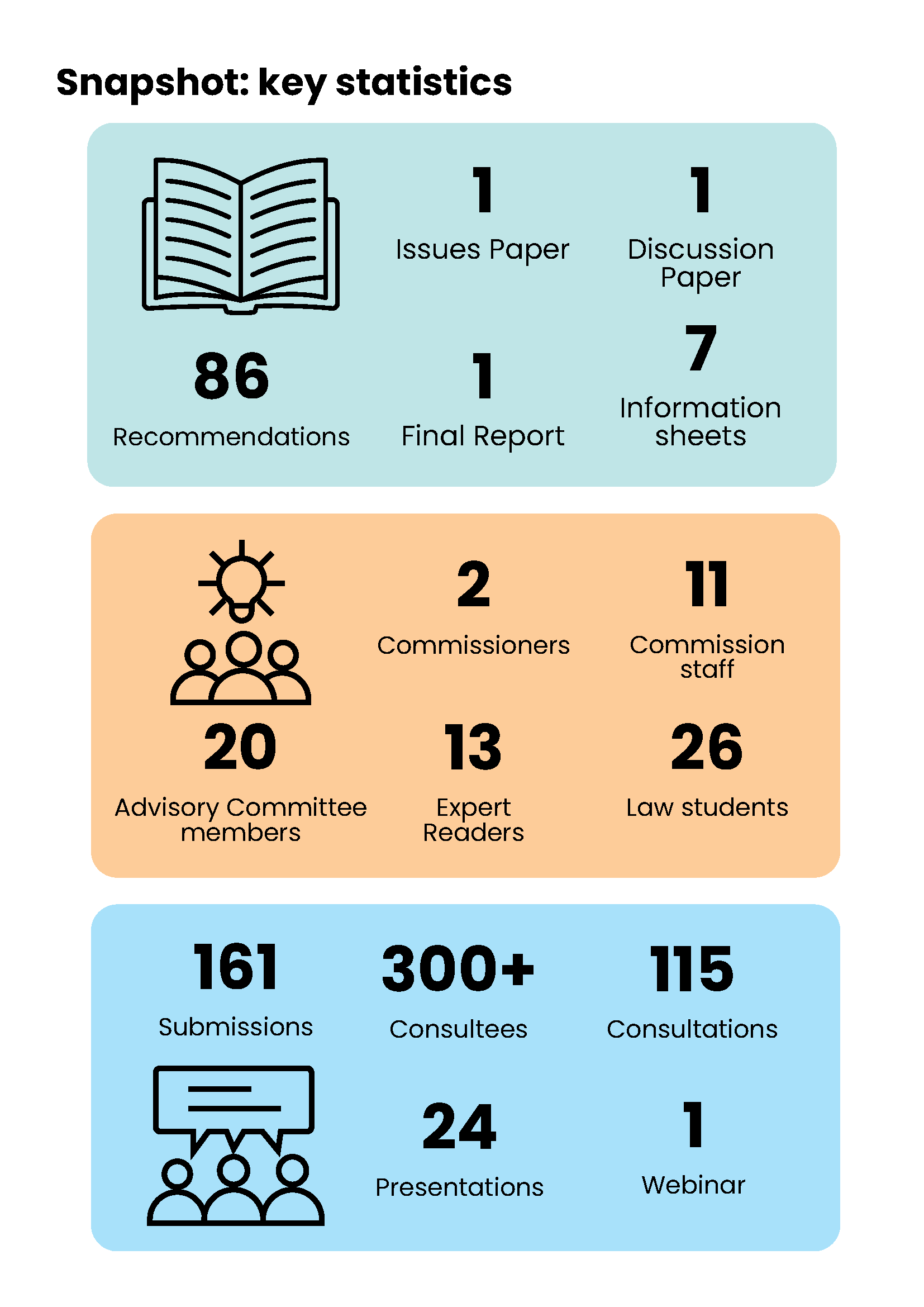 |
|
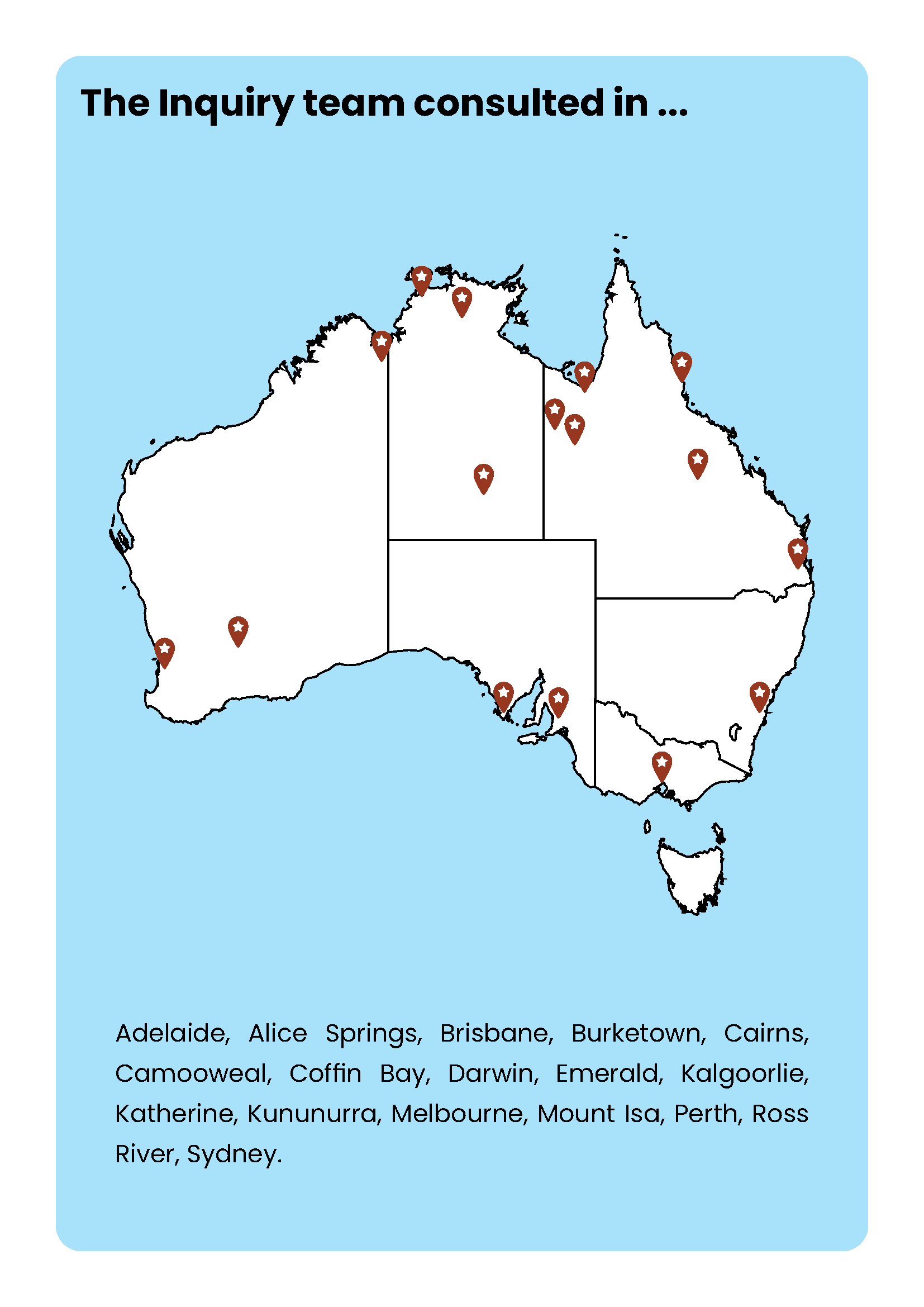
Consultation is a core element of the ALRC’s approach to law reform. Throughout the Review of the Future Acts Regime, the ALRC published a number of consultation publications as well as information sheets. The report is informed by more than 160 submissions, and extensive consultation and engagement around Australia with native title holders and First Nations communities, industry, governments, and legal practitioners. The ALRC conducted 115 consultations with more than 300 individuals and presented at numerous events.
Further information and resources
You can find further information and resources related to the Review of the Future Acts Regime below.
Webinar
The ALRC held a briefing webinar on 30 June 2026, featuring ALRC President Justice Mordy Bromberg and Commissioner Tony McAvoy SC. You can find a recording of the event below.
Information Sheets
|
|
|
|
|
|
|
|
|
|
|
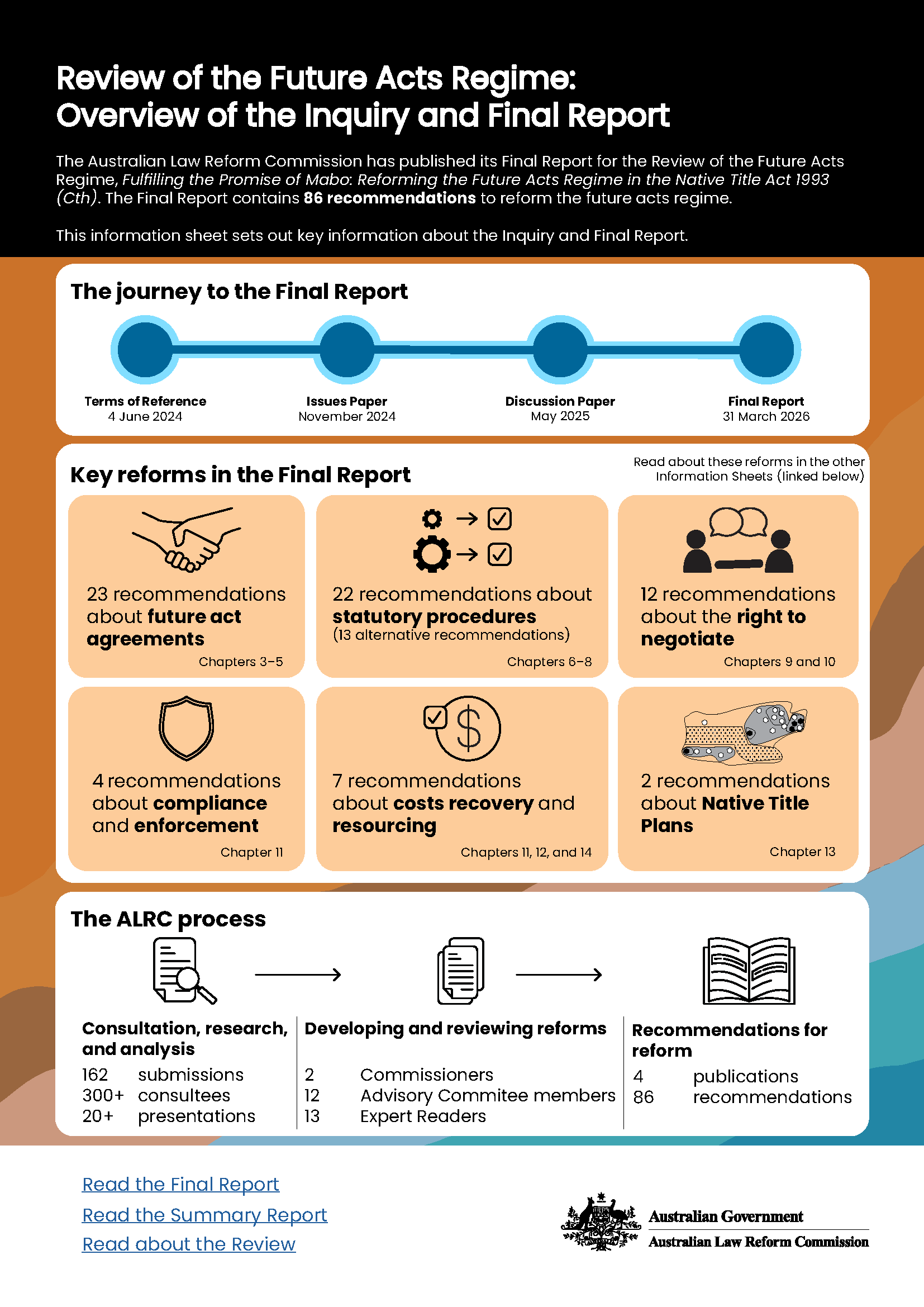
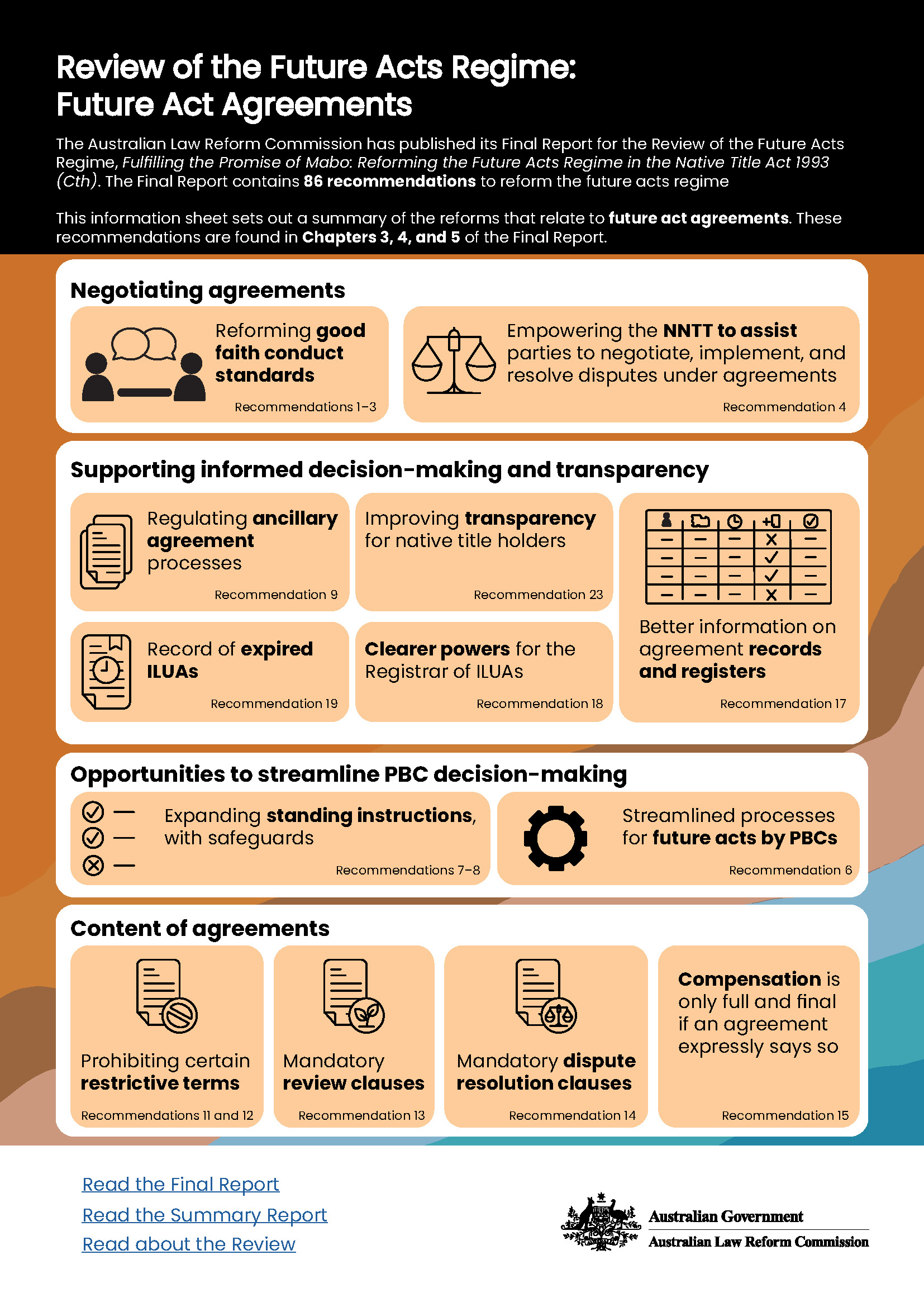
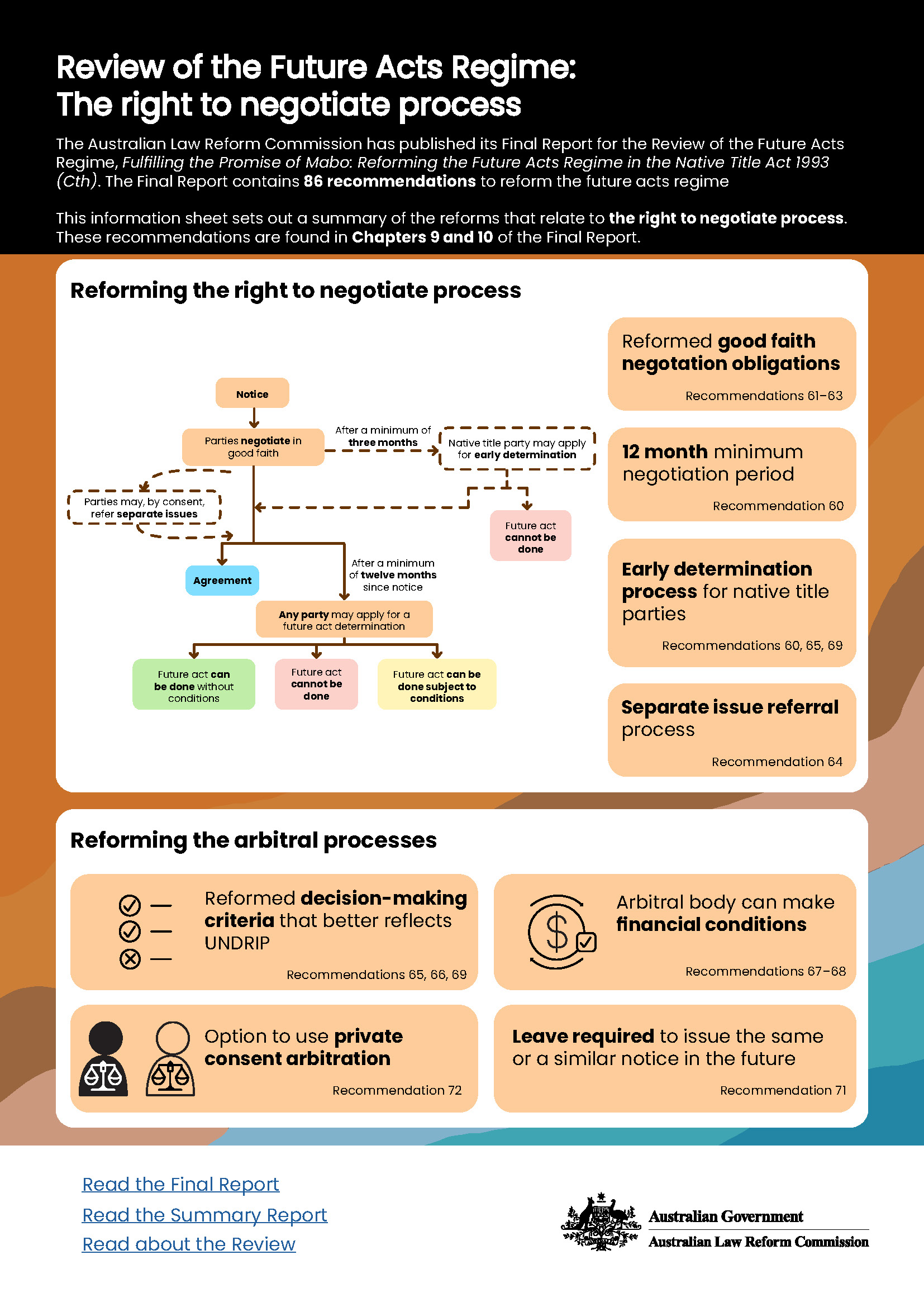
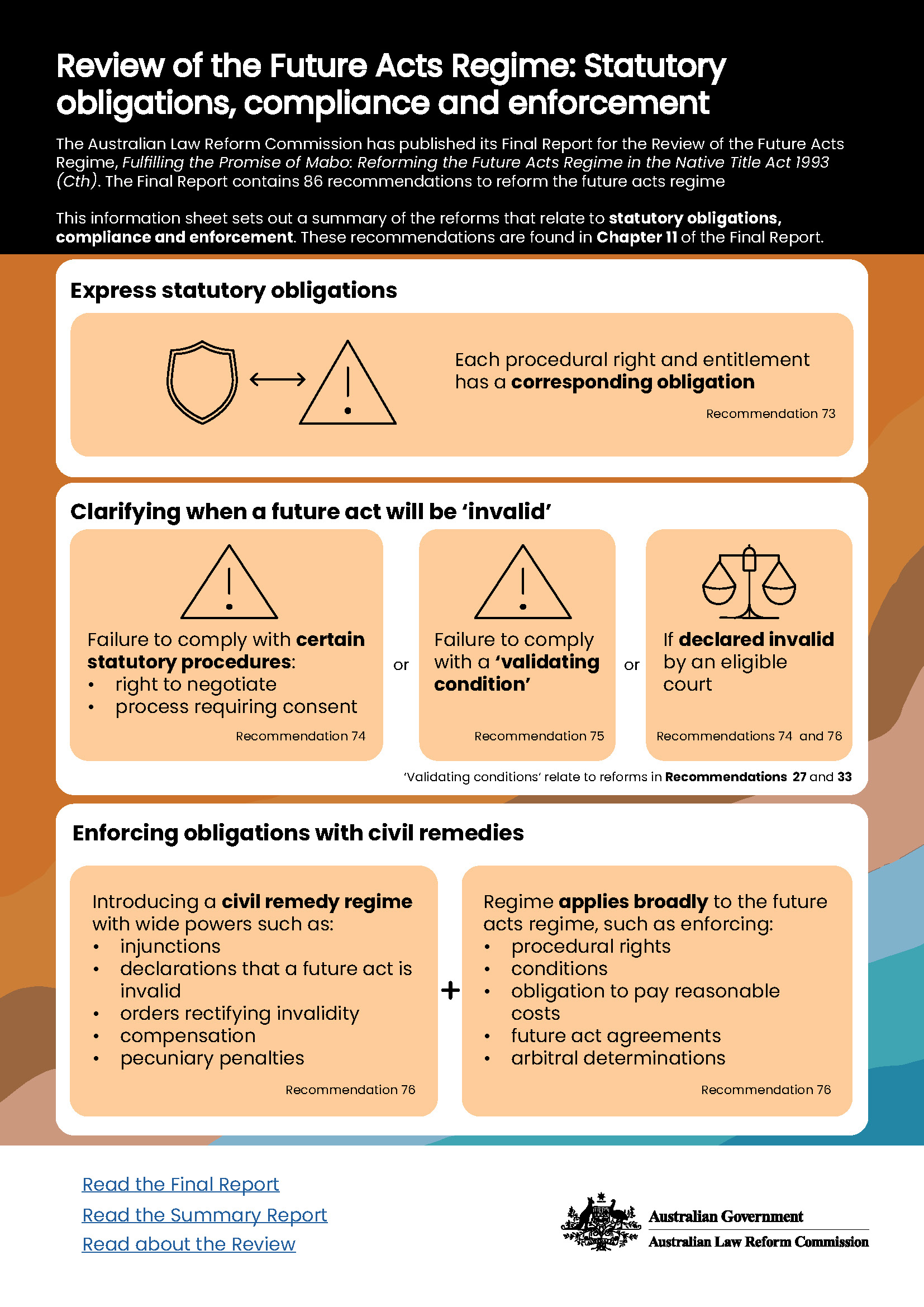
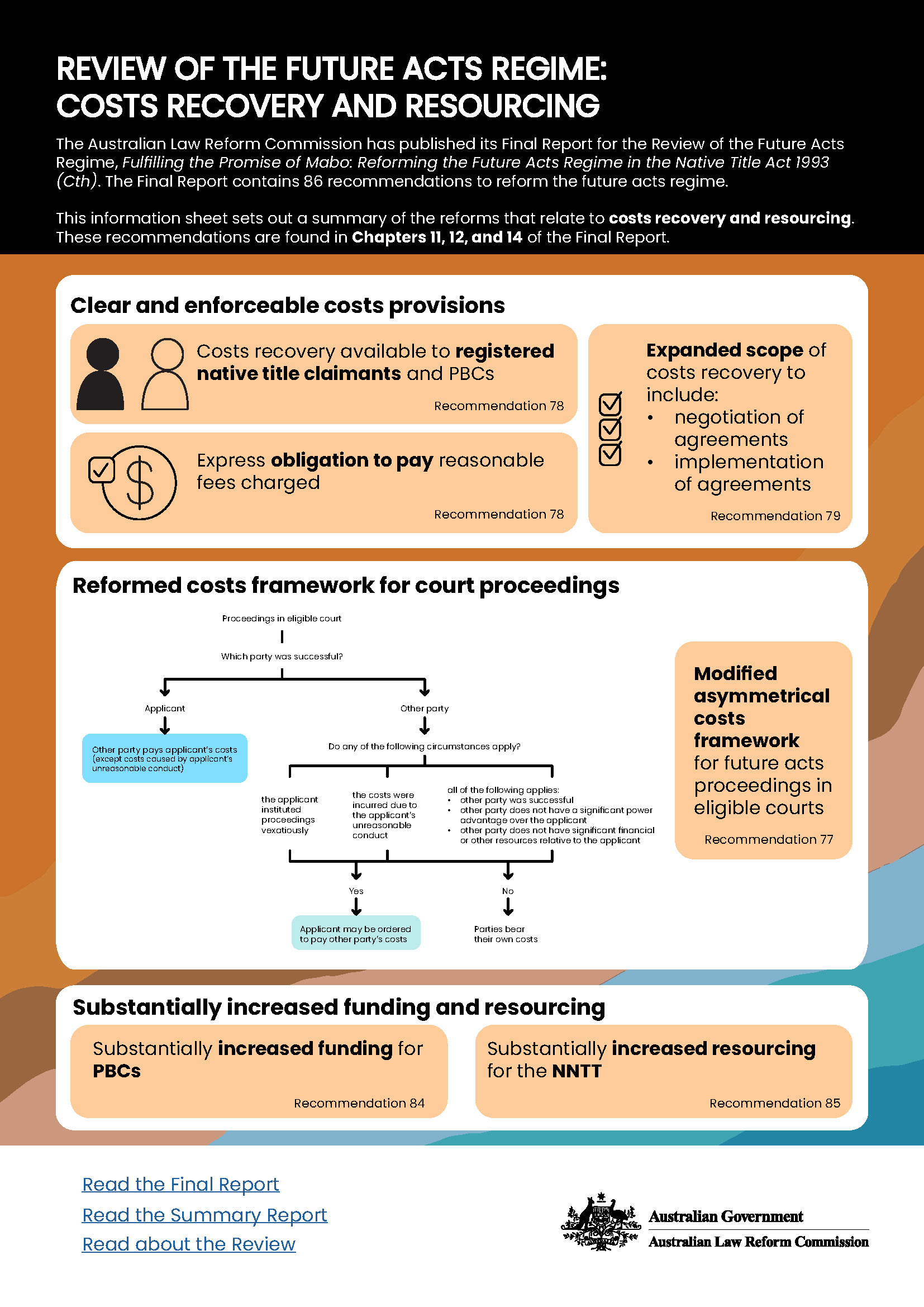
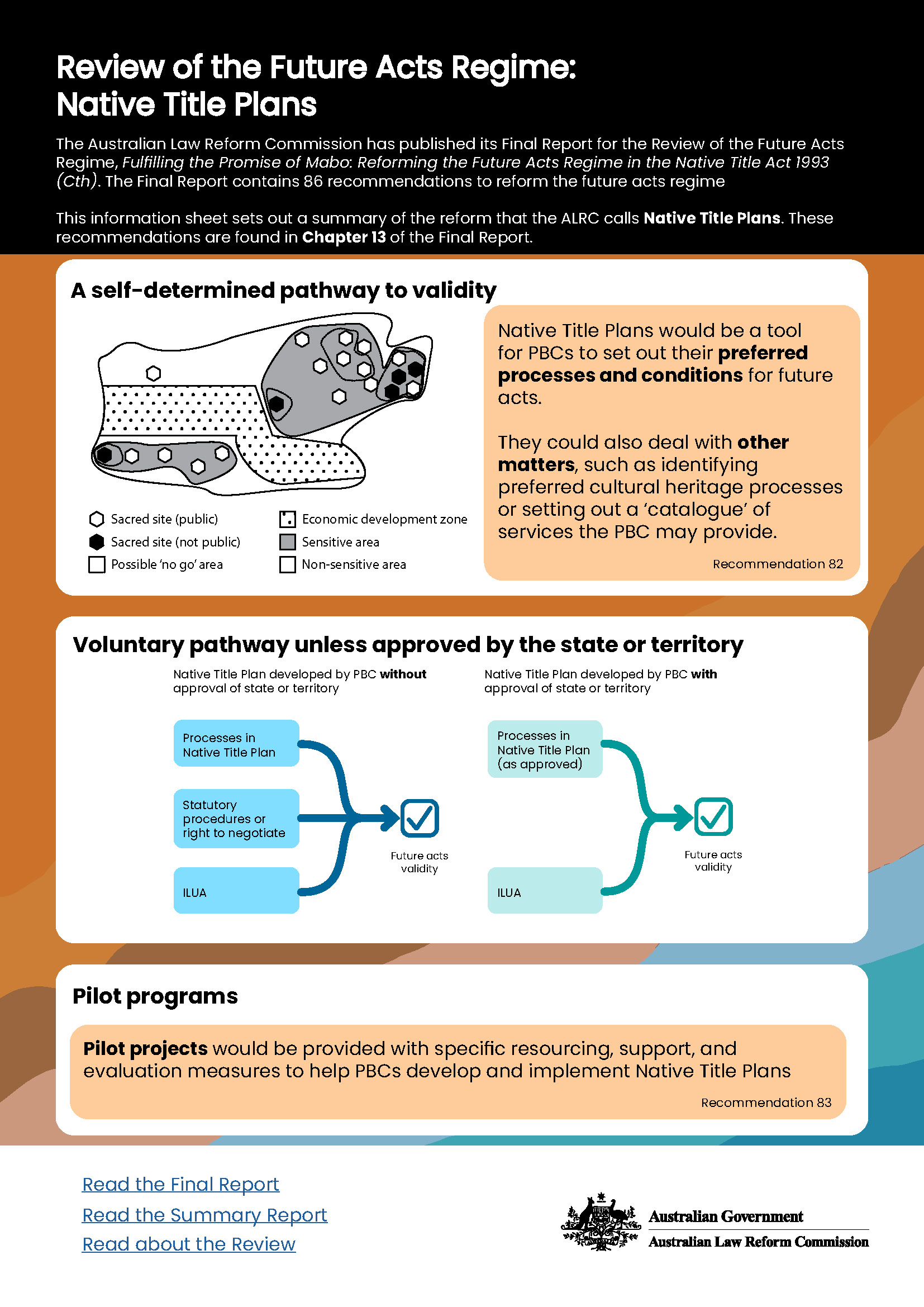
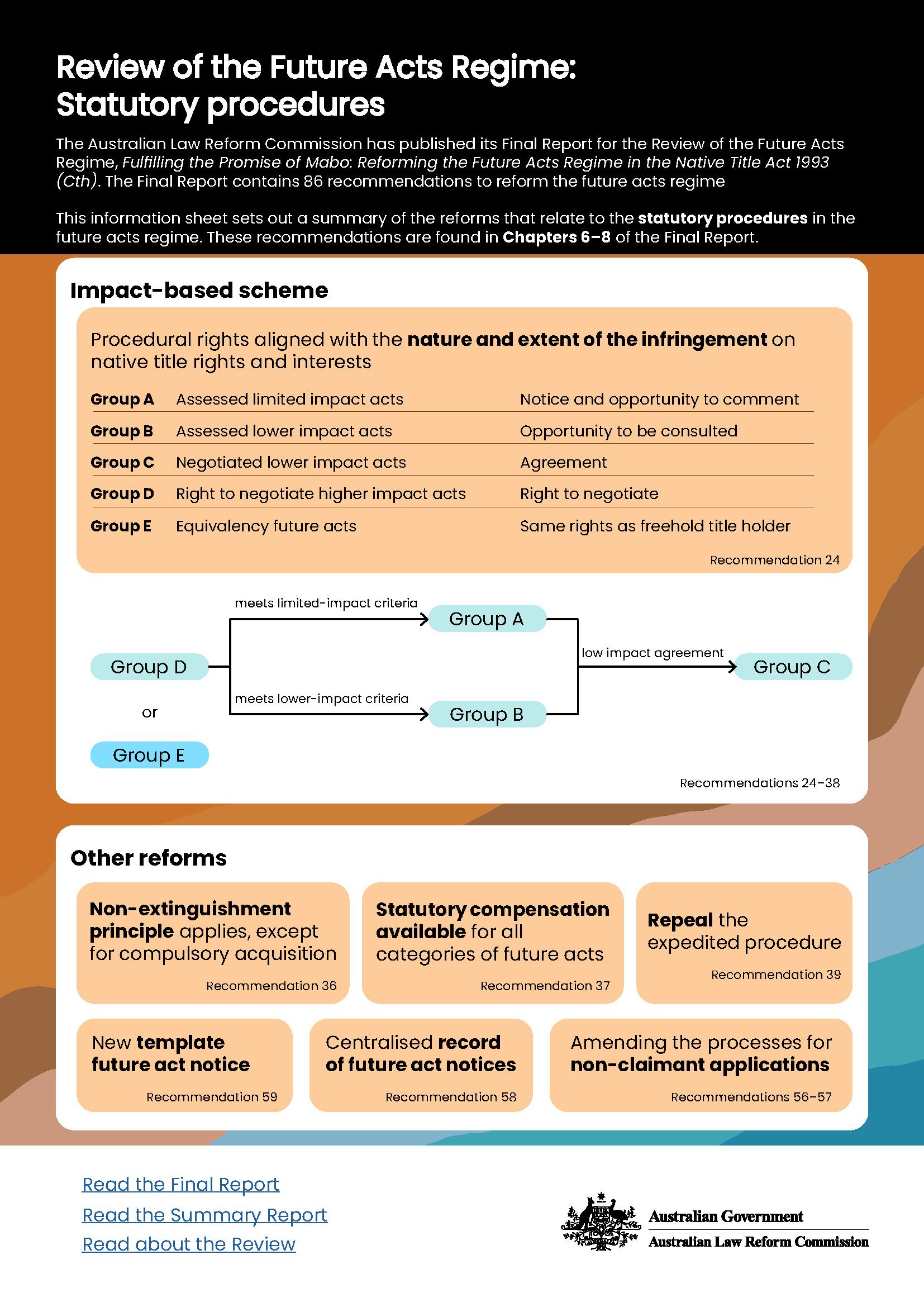
- Review of the Future Acts Regime
- Media release from the ALRC on the tabling of the report
- Media release from the Attorney-General on the tabling of the report
About the Cover Artwork

Tupun Wultatinyeri (Ngarrindjeri/Kukabrak), Duwatyin;ap nunkeri, 2026, acrylic on canvas.
Artist’s statement
Inspired by another series of mine titled “Beauty in the Journey”. I created a large canvas work that represents more of my own journey and places of influence in my life. With that large work it was a longing for healing I was searching for. With vibrant, earthy colours of water, vegetation, and soils. During the process I became inspired to create this work with muted grey tones, more attuned to my experience emotionally in how I have viewed my world. In the balance between culture, contemporary living, and searching for happiness, I have woven bright sparks of colour. In those vast swirls of grey, those sparks of light prove that culture and happiness aren’t separate to my experience, they exist beyond what I allow myself to see. The resilience of Country and culture. ‘Duwatyin;ap nganwe tumbettin wunyil nunkeri’ I am longing for my healing and happiness.
About the artist
Tupun Wultantinyeri is a Ngarrindjeri (Kukabrak) artist born in Adelaide, raised in the Riverland of South Australia and Mildura, North West Victoria. Now based in Melbourne, Tupun is an artist that creates topographical landscapes of his country in the Coorong region of South Australia. It is important for Tupun to reclaim and share his culture through his art practice.
Tupun began painting in late 2022 as a way of trying to find peace and found it successful. Today, he continues to paint as a way to meditate and transport his mind to the areas he depicts. He favours greens, blues and yellows in his works because they remind him of the vegetation, waters and sands back home.
Tupun has been awarded Confined 15’s G4S Acquisitive award for overall excellence in 2024, and Confined 16’s Dennis Thorpe Memorial Award in 2025. Tupun was recently named a shortlisted artist for Tourism Australia’s global songlines campaign, recognising the level of development in his practice.

This artwork was created through The Torch, a not-for-profit organisation that provides art, cultural and arts industry support to First Nations people currently in or recently released from Victorian prisons.
The Review of the Future Acts Regime is now complete.
For any enquiries or feedback regarding the Review, the Final Report or any other publications, please contact the ALRC at [email protected].